Similar Posts
Beyond Bowlby: The Roots of Attachment Theory
Neuroscience: Bowlby’s Ideas Meet the Modern Brain Bowlby’s brilliance lay not only in his observations but in his ability to weave ideas from multiple disciplines into a coherent model of human connection. For clinicians, understanding these influences can provide richer insight into why early relationships are so foundational.Neuroscience: Bowlby’s Ideas Meet the Modern Brain While…
The Truth About Avoidant Attachment: Why Distance Doesn’t Mean Disinterest
The Truth About Avoidant Attachment: Why Distance Doesn’t Mean Disinterest One of the most common misconceptions about avoidantly attached individuals is that they are emotionally detached and uninterested in connection. This assumption can lead to frustration, misunderstandings, and even a communication breakdown. We see this frequently in couples therapy. The Myth: Avoidant Clients Are Emotionally…
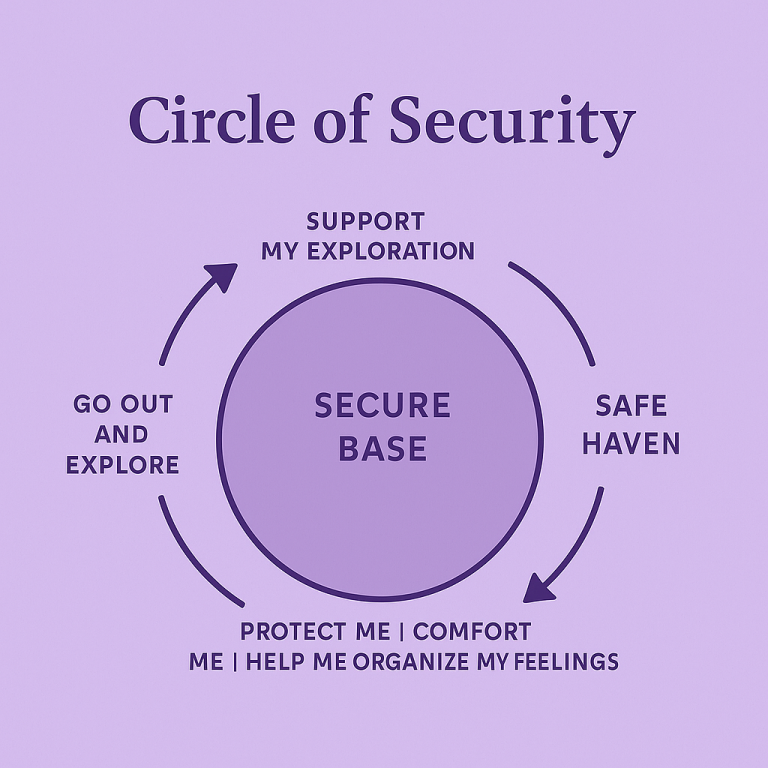
The Circle of Security: What Parenting Teaches Us About Therapy (and Why It Matters for Counsellors in Training)
If you’ve ever sat with a client and quietly thought, “Ah… this is an old dance they’ve been doing since childhood,” then you’re already brushing up against one of the most elegant and compassionate models in the attachment world: the Circle of Security. Whether you’re a parent, a therapist, a supervisor, or simply a human…
Decoding Attachment: The Surprising Ways Early Experiences Shape Our Stress Response
Decoding Attachment: The Surprising Ways Early Experiences Shape Our Stress Response As counsellors and psychotherapists, we witness firsthand how early attachment experiences leave lasting imprints on the mind and body. But what if we told our clients that these early relationships literally shape their brain’s wiring—especially when it comes to stress? Understanding the neuroscience of…
Building a Picture of a Client’s Internal World
How I Build a Picture of a Client’s Internal World I’ve been thinking about how I start to build a picture of a client’s internal world. Not just by listening to the story, although of course the story matters. I’m also listening to the body, the pauses, the shame, the little flinches, the way the…
5 Signs It’s Time to Renew & Reconnect in Your Relationship
Signs Your Relationship Needs a Couples Retreat Every relationship goes through seasons — some warm and bright, others stormy or stagnant. That’s normal. But when the storm clouds linger or the spark feels like it’s fading, couples often wonder: “Is this just a phase, or do we need help?” Attachment theory reminds us that our…