How I Build a Picture of a Client’s Internal World
I’ve been thinking about how I start to build a picture of a client’s internal world.
Not just by listening to the story, although of course the story matters. I’m also listening to the body, the pauses, the shame, the little flinches, the way the client meets me, or doesn’t, and what starts to happen between us.
In many ways, I am listening on several levels at once.
I listen for how the client makes sense of things. The black-and-white thinking, the rigid views, the catastrophising, the conclusions they have drawn about themselves and other people. I listen to how they talk about how others treat them, what they expect from people, and what they seem to believe will happen if they need something, say something, feel something, or get too close.
And at the same time, I’m noticing the nervous system response.
Because the body often tells me something the words are not ready to say yet.
Sometimes even the smallest thing gives me information. It can be so subtle. An eyebrow twitches, a breath gets held, there’s a sudden laugh, a shift in tone, or a quick glance away, and I find myself thinking, something just happened there.
They can seem like tiny things, but they often tell me a lot.
Not because I’m trying to read too much into everything, or decide I know better than the client, but because behaviour is communication. If I can slow down and let it speak, there is usually something useful there.
I often say to myself, not out loud of course, “let the behaviour speak.”
Because it stops me judging or getting cross with the behaviour. It helps me wonder what the behaviour is trying to protect, express, avoid, ask for, or survive.
What did this client learn to expect?
When I’m trying to build a picture of the client’s internal world, I find myself coming back to a few gentle questions.
The first is often: what did this client learn to expect?
Not just from parents, partners, or other people, but from relationship itself.
Did they learn that people leave? That people overwhelm? That people criticise? That people need looking after? Did they learn that comfort comes with a cost? Did they learn that being seen is dangerous, or that needing someone makes them weak?
These expectations can sit very quietly underneath the work. A client may not say, I expect you to leave me or I expect you to judge me, but their body, their pacing, their testing, their silence, or their carefulness may be showing me something of that expectation before the words arrive.
What feeling is hardest to stay with?
Then I wonder what feeling is hardest for them to stay with.
Is it sadness, anger, shame, need, tenderness, disappointment?
Because the feeling they cannot stay with for long often shows me where they have had to protect themselves in order to cope.
Some clients can stay with anger, but not grief.
Some can talk for hours about pain, but the moment kindness is shown, everything shuts down.
Some can care beautifully for everyone else, but cannot bear the exposure of wanting anything for themselves.
That tells me something important. Not only about what they feel, but about what they have had to move away from.
What happens when they feel unsafe?
Then I wonder what they do when they feel unsafe.
Do they start explaining, apologising, going quiet, pleasing, sharpening, making jokes, becoming very reasonable? Do they flood, freeze, perform, disappear, or try to become very easy to have in the room?
And I try to remember that whatever they do probably began as an attempt to stay safe.
It might not be helping them now. It might even be making relationships harder. But if I slow down enough, I can usually see why it once made sense.
That matters, because without that understanding I can easily start reacting to the behaviour instead of listening to it.
I might get caught by the sharpness, the silence, the endless explaining, the withdrawal, or the urgency. But when I can wonder what the behaviour is doing for the client, I stay kinder. I stay more curious.
What do they imagine I will do?
Then I wonder how they imagine I’m going to treat them.
That feels important to me.
They may be expecting me to judge them, leave them, misunderstand them, take over, become disappointed, get frustrated, rescue them, or quietly disappear.
And if I’m not paying attention, I can miss that they are not only responding to me as I am now. They may also be responding to what they have learnt to expect from people before me.
This is where the therapeutic relationship gives us so much information.
A client may be polite, but braced. Warm, but watchful. Engaged, but waiting for the moment I get it wrong. They may seem to accept support while quietly preparing for it to be taken away.
Again, this is not about assuming I know. It is about noticing gently, and letting the relationship teach me something.
What starts happening between us?
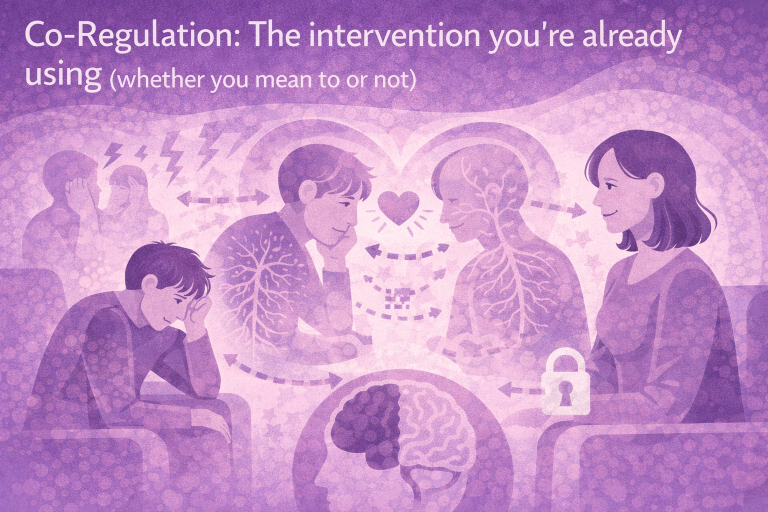
And then I try to notice what starts happening between us, because that can tell me something too.
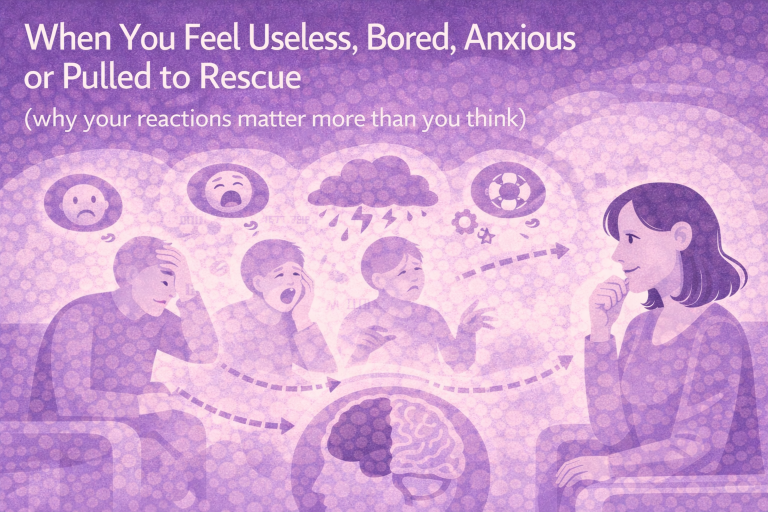
Do I feel pulled to rescue, pushed away, unusually careful, or like I’m working harder than I normally would? Do I feel protective, confused, tired, irritated, anxious, or strangely responsible?
Not because my feeling is automatically the truth.
It isn’t.
But it may be part of the picture.
It may tell me something about the relational pattern the client has lived inside, or the one we are beginning to create together in the room.
Of course, this is something to hold carefully. It needs reflection, supervision, and humility. But if I dismiss what is happening between us, I may miss valuable information.
Listening to what is spoken, shown and repeated
This is why I think building a picture of a client’s internal world is such delicate work.
It is not just about gathering facts.
It is about listening to what is spoken, what is shown, what is avoided, what is repeated, and what begins to happen in the relationship.
So, if I strip it right back, these are the questions I come back to:
What did this client learn to expect?
What feeling do they struggle to stay with?
What do they do when they feel unsafe?
What do they imagine I will do?
What starts happening between us?
For me, these questions help me stay curious when the work feels tangled.
Because all behaviour is communication.
And when I can listen to it with care, it often begins to tell me something about the world the client has been living in.
Judge the behaviour, miss the message you may.