When the Memory Isn’t the Only Thing in the Room
EMDR can be incredibly powerful. I have seen it help clients move through memories they have carried for years, reduce the emotional charge around what happened and finally begin to feel that the past is in the past.
But sometimes the work doesn’t move in the way we expect it to.
The client understands the process, wants things to change and has agreed to the work, yet something keeps getting in the way. Processing stalls. They go blank, become analytical, or begin talking around the memory rather than staying with it. They may say nothing is happening, worry they are doing it wrong, or start losing confidence in the process.
If we’re honest, we can begin losing confidence too.
We revisit our formulation, think about different targets or interweaves, wonder whether more preparation is needed and find ourselves working harder to get the therapy moving.
Sometimes that’s exactly the right response. Dissociation, grief, shame, neurodivergence, current risk or practical instability may all need our attention.
But sometimes attachment is sitting quietly in the middle of the work.
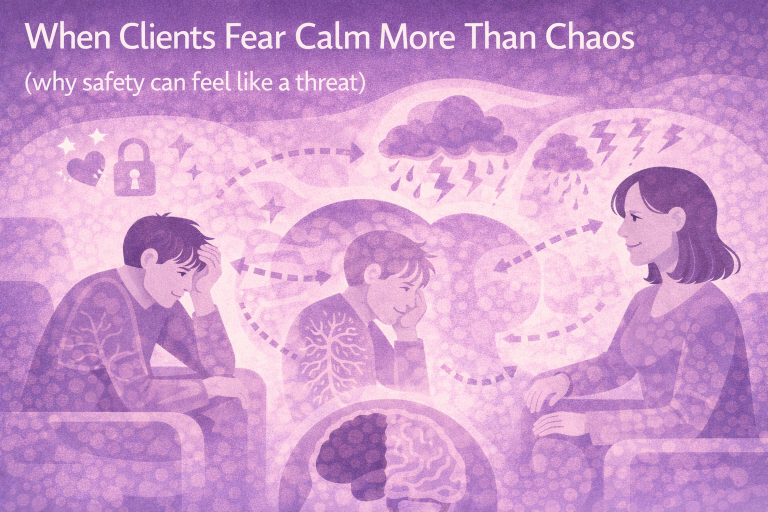
The client may want to heal and still be frightened of what healing asks of them Trauma processing doesn’t happen in isolation. It happens in the presence of another person.
For many clients, that relationship provides enough safety to approach what happened. For others, it adds another layer of difficulty because needing another person has never felt straightforward or safe.
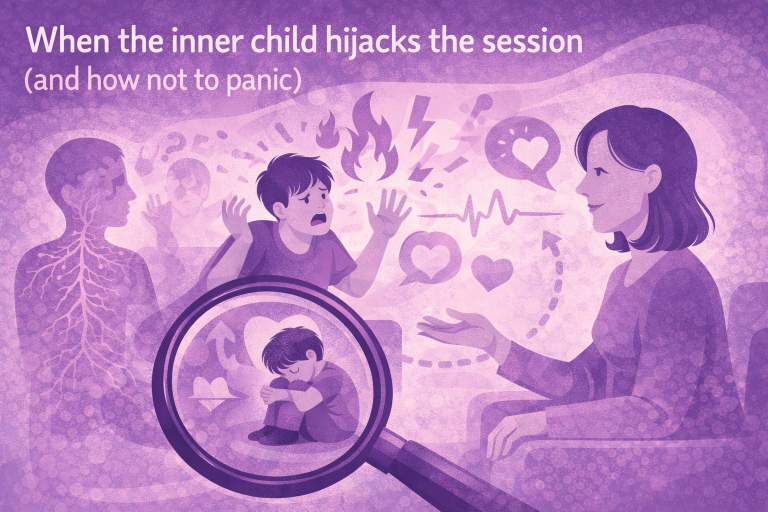
They may genuinely want our help while feeling uneasy about relying on us. They may long to be understood but become frightened when they feel seen. One part of them trusts us, while another remains watchful, expecting disappointment, criticism or loss.
From the outside this can look like avoidance or resistance. Often it is something else.
The client may have learned that closeness comes with a cost, so while one part wants to process the trauma, another is working just as hard to avoid becoming too vulnerable in front of us.
That protective part isn’t trying to sabotage therapy.
It is trying to keep them safe in the only way it knows how.
When the process stalls, look at what is happening between you A client may disconnect every time the work approaches something emotionally significant. They may become highly compliant, follow every step perfectly, yet remain emotionally distant. They may minimise the memory, question whether it matters or suddenly decide they’ve chosen the wrong target.
These moments are easy to see as obstacles, particularly when we are trained to facilitate continued processing.
But perhaps they are also telling us something.
What does it mean for this client to need another person?
What do they expect will happen if they become distressed in front of us?
What have they learned about relying on someone else?
Sometimes the memory isn’t the only thing they are protecting themselves from.
They may also be protecting themselves from what it feels like to need us.
And what begins to happen in us? When processing repeatedly stalls, something often begins happening in the therapist too.
We may become more active, more reassuring or more determined to find the next intervention. We explain more, encourage more and quietly carry the hope the client cannot yet hold.
Of course, not every response we have belongs to the client. We all bring our own attachment histories, expectations and blind spots into the room.
But our responses can still be clinically informative.
Rather than asking only, “What should I do next?”, it may be worth wondering, “What is happening in this relationship that is drawing me into working harder?”
Sometimes that question tells us as much as the stalled processing itself.
A memory can settle while the relational pattern remains A client may process a memory successfully and still struggle in relationships. They may continue withdrawing when intimacy grows, seek reassurance without trusting it or feel responsible for everyone else’s emotions.
That doesn’t mean the EMDR has failed.
Some beliefs are organised around one traumatic event. Others develop slowly through repeated relational experiences.
Attachment helps us understand why a memory can lose its emotional intensity while relational patterns continue to shape everyday life.
Those patterns often appear in the therapy room too, influencing not only how the client relates to us, but how the therapy itself unfolds.
Attachment doesn’t replace EMDR This isn’t about choosing one model over another.
Attachment simply offers another clinical lens. It helps us think about how the client manages closeness, vulnerability and safety, and what they expect from another person when they are distressed.
Sometimes that changes the pace of the work.
Sometimes it changes how we use the therapeutic relationship.
And sometimes the next useful intervention isn’t another target or another interweave.
Sometimes it is simply naming what seems to be happening together.
“I’ve noticed that each time we get close to this memory, something seems to pull you away. I wonder whether one part of you wants to continue, while another is trying to keep you safe.”
These observations aren’t techniques. They need to arise from genuine curiosity rather than certainty.
The aim isn’t to dismantle a defence.
It is to understand what the defence has been protecting.
Sometimes the relationship is part of the healing For some clients, healing comes not only from processing the past but from having a different relational experience in the present.
They may discover that disagreement doesn’t end the relationship, that they don’t have to perform therapy correctly to remain connected, or that they can slow the work down without disappointing us.
These moments can seem small beside formal trauma processing.
To the client, they may be anything but.
A different clinical question When EMDR feels stuck, it can help to pause before reaching for another intervention.
Instead of asking only, “Why isn’t this processing?”, we might also ask:
- What happens just before the client disconnects?
- What might emotional closeness mean to them?
- Are they trying to experience the therapy, or are they trying to do it correctly?
- What am I noticing in myself?
And perhaps the most important question of all:
What is this protecting?
These questions don’t replace sound EMDR practice. They simply remind us that not every pause in processing is a sign that something has gone wrong.
Sometimes it is a sign that something important has come into view. Perhaps the question isn’t whether EMDR is enough. Perhaps it is whether we understand enough about what this particular client has learned to expect from another person.
Perhaps the question isn’t always, “How do I get the processing moving again?”
Perhaps it’s, “What is this stuckness communicating?”
Rather than seeing it as something to overcome, we might begin to see it as useful clinical information – inviting us to pause, become curious and explore what might be happening here, between us.