When Agreement Isn’t the Same as Engagement
I’ve been thinking about clients who agree with everything I say, and how easy it is for me to experience that as engagement.
And sometimes, of course, it is. Sometimes I say something and the client says, “Yes, that’s exactly it,” and I can feel that something has landed. There is a shift in the room, and I feel the client has experienced some empathic understanding.
But I’m trying to pay more attention to the yes that comes instantly. The nodding, the quick agreement, the moment where I find myself wondering whether the client has really had time to check inside themselves, or whether this is something more automatic. Almost as if they are trying to keep the relationship steady by going along with me.
I start to wonder, is this what they have always done? Agree, adapt, be easy, don’t make a fuss, don’t risk getting it wrong.
When compliance looks like engagement
It can be hard to spot, because compliant clients can feel quite reassuring to work with. They turn up, they answer, they reflect, they thank me, they seem to take things on board. There is no obvious rupture, no pushback, no difficult silence, no anger coming towards me.
The work seems to move along, and I can easily think, that went well.
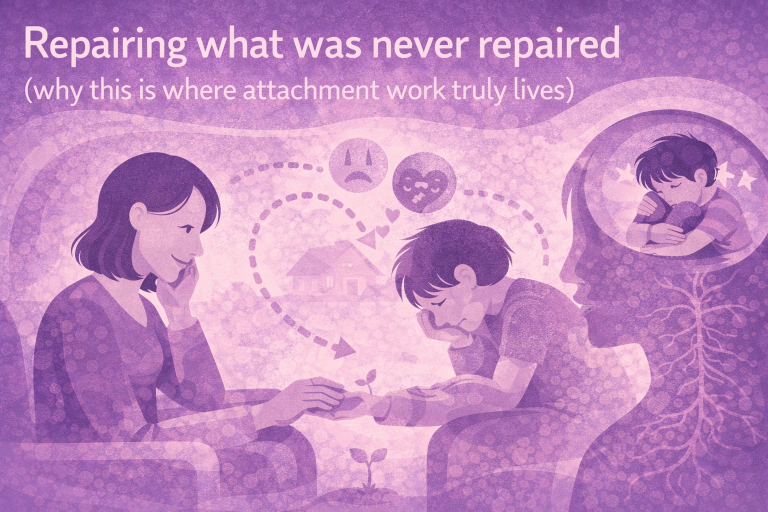
But if agreement has kept a client safe before, then disagreeing with me may not feel like a simple choice. It may feel rude, exposing, disloyal, or dangerous in a way they cannot quite explain. They may not be trying to mislead me. They may simply have learnt that keeping the other person comfortable matters.
For those clients, therapy can become another place where they try to get it right. They may give me the version of themselves they think I will like. They may reassure me when something didn’t land. They may say yes because saying no feels too risky, or because having a separate view feels unfamiliar.
And if I am not paying attention, I can get quietly pulled into the same pattern.
I accept the agreement and move on. I feel reassured because they have reassured me. I think the relationship is safe because they are not challenging it, when they may be working very hard not to challenge it.
The client who makes the work feel easy
That feels important to me, because the client who agrees with everything is not always easy. Sometimes they are one of the hardest clients to really reach, precisely because they make the work feel easy.
There may be nothing obvious to push against. Nothing that asks for repair. Nothing that seems to say, look here.
So, I am trying to become more aware and reflective of the quick yes. Not suspicious. Not trying to catch the client out. Just interested in what might be happening underneath.
What happens if I pause?
What happens if I don’t rush on because they have agreed?
What happens if I leave a little more space and say something like, “I notice you agreed very quickly there, and I’m wondering if there is any part of you that isn’t so sure?”
Or, “I wonder what it would be like to disagree with me?”
Even writing that, I can imagine how exposing it might feel for some clients. Because if disagreement has led to criticism, withdrawal, disappointment, or someone going cold, then disagreeing with the therapist is not a small thing.
It is relationally risky.
Making room for a separate mind
And perhaps that is where the work is.
Not in getting the client to agree with my most accurate reflection, but in making enough space for them to have a separate mind in the room. To be unsure. To correct me. To disappoint me a little. To say, “No, that’s not quite it,” and find that I am still there.
That can be a new experience of relationship.
So next time a client agrees very quickly, it might be worth noticing what happens in you.
Do you relax too quickly?
Do you move on because the agreement feels good?
Do you let their yes reassure you before really wondering about it?
Because sometimes the yes is real.
And sometimes the yes is a very old survival strategy wearing very good manners.
Have a good day in the therapy room!
Agree they may, but listen beneath we must.
Jo