The Therapeutic Relationship as a Secure Base
I’ve been thinking about how easily I can get caught up in trying to find the right intervention. The right thing to say, the right question, the right bit of theory that will help the client move from where they are.
And of course, interventions matter. I’m not saying they don’t. We need skills, we need theory, we need to know what we’re doing. But I’ve been reminded recently that the intervention is not the whole story.
We have just finished with our first Level 7 cohort, and I have been listening to their research findings, which has been so exciting. Different projects, different client groups, different areas of focus, but one thing kept coming through.
It’s the therapeutic relationship, our ability to create safety, and the client’s ability to accept that safety, that matters most. Consistently, it was the secure base that made the work possible.
And I think I needed that reminder, because when a client is distressed, shut down, angry, testing, withdrawing, overwhelmed, or hard to reach, I can still feel myself reaching for the thing.
What do I do here? What intervention fits? What should I say next? Have I missed something?
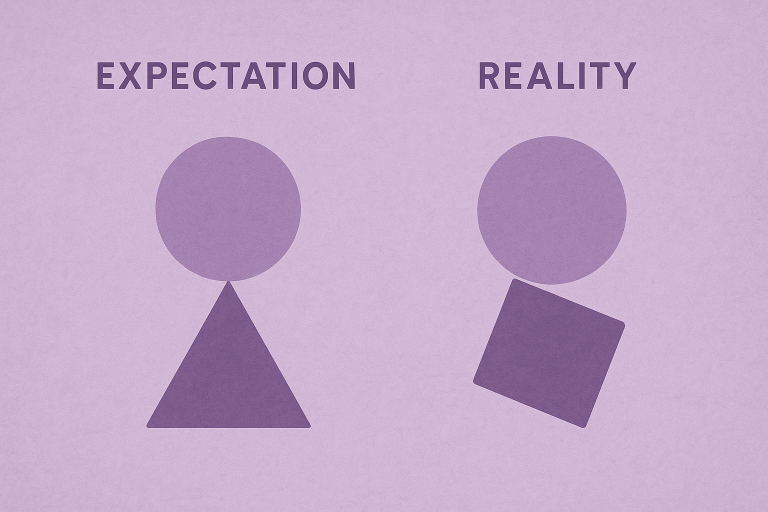
Yesterday I was reminded that what I often need is to come back to the relationship and ask, what is it like for this client to be offered safety by me?
When safety does not feel safe
Because that is not straightforward, is it?
We can offer warmth, steadiness, care, consistency, compassion, interest, all the things we know matter, but that does not mean the client can automatically receive them as safe.
For some clients, especially those who have not had a model of secure relationship before, safety can feel strange. It can feel suspicious. It can feel like something they are waiting to lose. It can feel exposing, or uncomfortable, or like there must be a catch somewhere.
And I think I can forget that sometimes. We know we are not there to shame them. We know we are not trying to control them, criticise them, abandon them, or make them too much. But the client may not know that yet.
Or they may know it in their head, but their nervous system is still watching us very carefully for signs that the old pattern is about to repeat itself.
They might be waiting for the disappointment. They might be waiting for us to go cold. They might be waiting for the moment we get frustrated, or bored, or quietly fed up.
They might be waiting to find out whether their need will be too much, whether their anger will push us away, whether their silence will make us give up, whether their mistrust will offend us.
And that makes me think about how patient this work asks us to be. Not passive, not vague, not endlessly accommodating, but patient in the proper sense. Patient enough to understand that trust is not built because we have told someone they can trust us. It is built because something is experienced, repeatedly, over time.
The small things that build the relationship
So maybe building the therapeutic relationship is in the small things as much as the big ones.
It is in being consistent. It is in how we hold the frame. It is in how we respond when they pull away, or test, or disagree, or go quiet. It is in how we repair when we get something wrong.
It is in whether we can stay warm without becoming overwhelming, boundaried without becoming cold, curious without becoming intrusive.
And I think for clients who have not had secure relationship modelled before, those things can matter more than we realise.
They may not trust the relationship because we are kind. They may begin to trust it because we are kind and still there next week. Because we notice something and do not use it against them. Because we can hear their anger without retaliating. Because we can accept their mistrust without needing to prove ourselves immediately. Because we can hold a boundary and remain connected.
That last bit feels important to me, because I think sometimes we can confuse safety with softness.
But safety is not just being gentle. Safety is also clarity. It is reliability. It is knowing where the edges are. It is the client feeling that we are not going to collapse, rescue, punish, disappear, or take over.
And for some clients, that can be a completely new experience of relationship.
What evidence are we building together?
So, when I feel myself reaching for the right intervention, I am trying to pause and ask myself a different question.
What evidence are we building together that this relationship might be different from the ones they have known before?
Not in a dramatic way. Not in a “look how safe I am” kind of way, because that would probably be quite irritating. But quietly, through the repeated experience of being met, misunderstood and repaired, challenged and still respected, boundaried and still cared for.
That, I think, is where the secure base begins to form.
Not because the client suddenly decides to trust us, but because part of them slowly starts to gather evidence that perhaps this relationship does not have to end the way others have.
Perhaps closeness does not always mean danger.
Perhaps disagreement does not always mean disconnection.
Perhaps being seen does not always lead to shame.
And maybe that is the bit I want to hold onto from this year’s Level 7 research. The therapeutic relationship is not just the nice bit around the work. It is the condition that allows the work to happen.
It is where the client gets to practise safety, doubt it, test it, lose sight of it, find it again, and slowly, perhaps, take some of it inside.
The relationship is part of the work
So yes, I will keep learning interventions. I will keep loving a good model and a well-timed question. But I want to remember that the most beautiful intervention in the world still must land inside a relationship the client can bear to receive.
And for some clients, helping them bear a safe relationship is the work.
Have a good day in the therapy room!
Offer safety we can, but receive it slowly, they may.
Jo