Knowing Attachment Theory Is Not the Same as Using It
I’ve been thinking about the difference between knowing attachment theory and actually using it in the therapy room.
Because I think a lot of us know the basic ideas. We know early relationships matter. We know clients can move towards closeness, pull away from it, become anxious in it, or find it difficult to trust. We may know the attachment categories and understand them well enough in theory.
But then a real client is sitting in front of us, and it becomes more complicated.
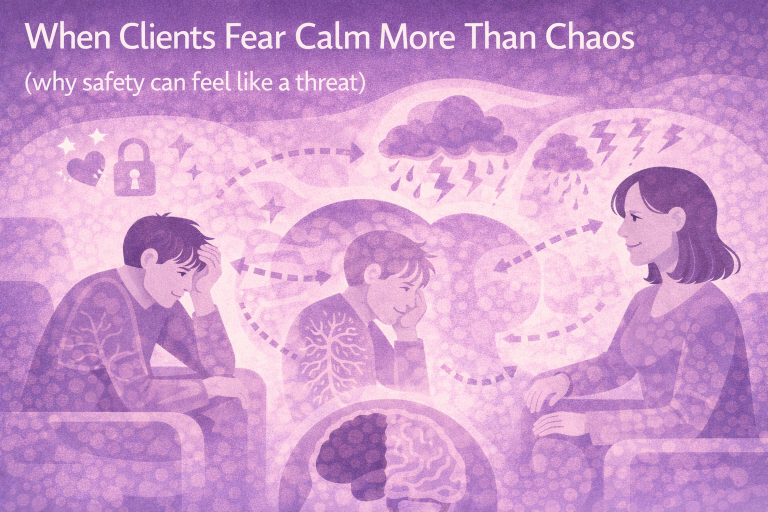
A client has a moment of closeness in the session, something tender happens, and then the following week they pull away. They go quieter. They miss a session. They become very busy. They say they are fine, but something in the relationship feels different.
And that is the point where attachment theory either stays as something we know, or becomes something we can use.
Attachment theory is not just about labels
I often come back to Alice Miller’s quote:
“The way we were treated as small children is the way we treat ourselves for the rest of our lives.”
I know it is a simple sentence, but for me it opens up so much clinically.
It helps me pause and wonder, how has this client learnt to treat themselves? What did they learn to expect from relationship? What might closeness feel like to them? What might they imagine I now want from them, expect from them, or feel towards them?
Because attachment theory is not just about giving the client a label.
It is not simply, “this client is avoidant,” and then we are done.
It becomes much more useful when it helps us understand what might be happening underneath the behaviour, and what might be happening between us in the room.
When a client pulls away after closeness
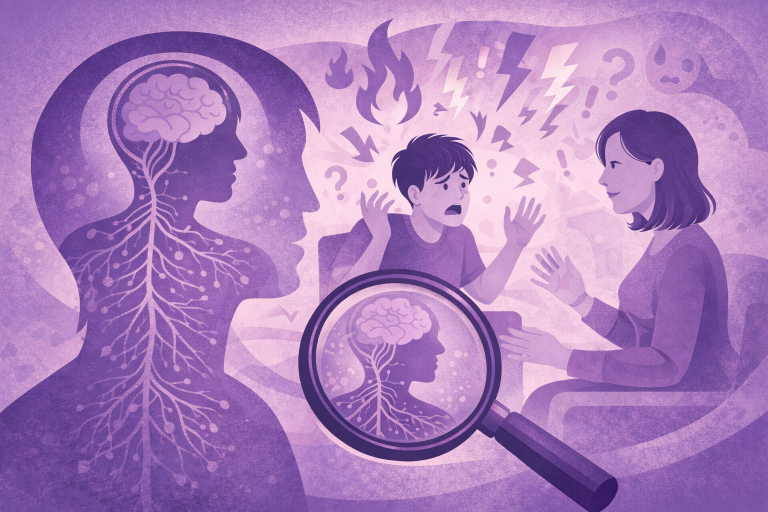
If a client pulls away after a moment of closeness, I might feel a little rejected, confused, or tempted to move towards them quickly and try to get the connection back. I might want to reassure, explain, interpret, or do something clever.
But if I can slow down, attachment gives me somewhere else to begin.
What might closeness have meant before?
Did closeness come with pressure, shame, intrusion, disappointment, loss, or the need to look after someone else?
Is pulling away a lack of engagement, or is some part of them trying to stay safe?
That changes the timing of the work.
I may not need to rush in. I may need to notice the shift gently, respect the distance, and be curious about what happened without making the client feel chased or exposed.
Using attachment theory in the relationship
This is where attachment theory becomes more than information.
It helps us think about formulation, timing, pacing, rupture, repair, defences and the therapeutic relationship itself.
It also helps us notice our own response.
Because if I feel pushed away, suddenly very responsible, or desperate to get the work back to where it was, that might be part of the picture. Not the whole truth, but information. Something is happening in the relationship, and I need to be awake to that before I decide what to do next.
That, for me, is where attachment theory becomes clinically alive.
Not when I can describe the theory perfectly, but when it helps me think more clearly about what is happening in the room.
When the work gets complicated
I think this is what attachment training needs to do. Not just give us more information, but help us integrate the theory into practice and lived experience, so it becomes something we can actually use with a real client in a real session.
So maybe the question is not just, do I know attachment theory?
Maybe the better question is, can I use it when the work gets complicated?
Can I use it to wonder what the client learnt to expect?
Can I use it to notice what is happening between us?
Can I use it to think about what the relationship may need next?
That is the difference, I think.
Knowing the theory is helpful.
But using it in the relationship is where the work starts to change.
Have a good day in the therapy room!
Knowing the theory is one thing. Letting it guide the relationship is another.
Jo