Similar Posts
Myth: Attachment-based therapy is too abstract to apply to real-world problems. The truth: Neuroscience helps therapists turn attachment concepts
Attachment-Based Therapy Isn’t “Too Abstract”—Here’s How Neuroscience Makes It Practical If you’ve ever dismissed attachment-based therapy as too abstract or “theoretical,” you’re not alone. It’s easy to feel that way when terms like secure attachment, internal working models, or attachment styles are thrown around in ways that sound more academic than actionable. But here’s the…
What We Miss When We Stay in the Here and Now
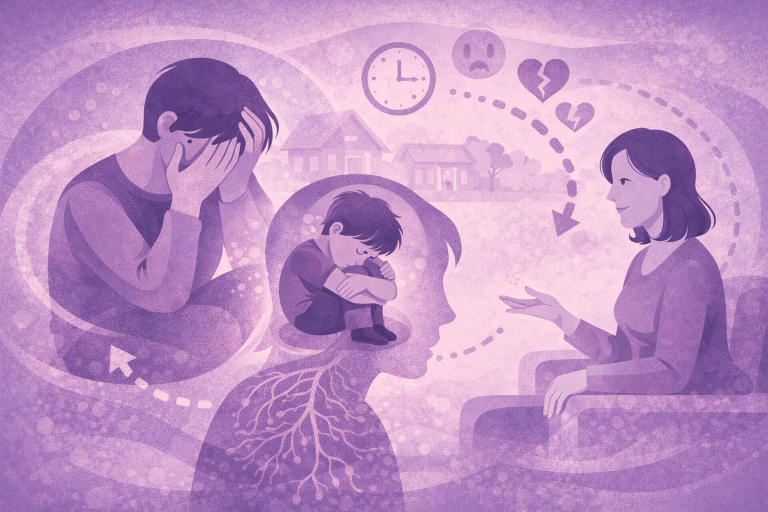
(Why Developmental Thinking Changes Everything) There’s a quiet assumption woven into much therapeutic work:that if we stay present-focused enough, insight and change will follow. For many clients, this is true. But for others – often those with early relational trauma – something essential gets missed when therapy remains anchored only in the present. These are…
This Is Not Just a Request for Attention. This Is a Protest Against Disconnection: A Therapeutic Reframe from David Wallin
What if “attention-seeking” is actually a protest against disconnection? Explore David Wallin’s powerful reframe of client behavior through the lens of attachment theory—and how it can transform your therapeutic presence
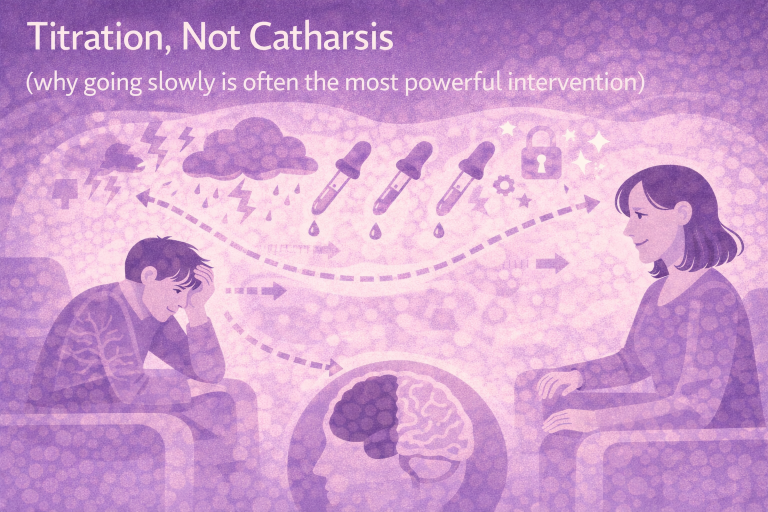
Titration, Not Catharsis
(Why Going Slowly Is Often the Most Powerful Intervention) There’s a quiet pressure many counsellors feel – even if they don’t name it. That therapy should go somewhere.That something should happen.That emotional release equals progress. And when clients carry trauma, there can be an added, unspoken belief:If we don’t access the pain fully, are we…
The Science of Connection: How Oxytocin Supports Breakthroughs in Therapy
How Oxytocin Supports Breakthroughs in Therapy As counsellors, we see first-hand how attachment wounds shape our clients’ struggles. But beyond theory, there’s a biological side to healing too—our brains are wired for connection, and neurochemicals play a vital role in the therapeutic process. Oxytocin, often called the “bonding hormone,” is key. It’s released through safe,…