
Let’s Listen
Listen
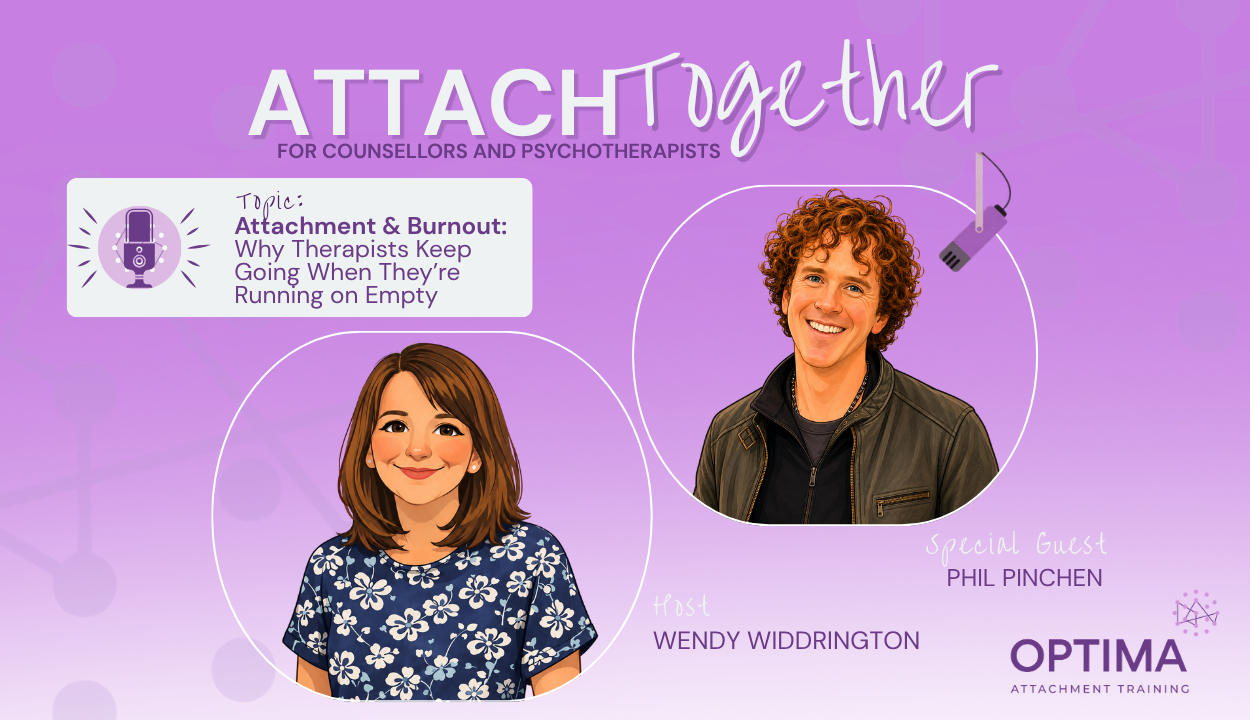
Attachment & Burnout: Why Therapists Keep Going When They’re Running on Empty
Attachment and burnout in therapy raises an important question for counsellors and psychotherapists: could our attachment styles influence not only how we experience relationships and practise therapy, but also how we respond when work begins to overwhelm us?
In this episode of The Attachment in Practice Podcast, Wendy Widdrington is joined by Phil Pinchen, counsellor, couple therapist and supervisor, for a reflective conversation about attachment theory, attachment styles, relationships and therapy — this time turning the attachment lens towards therapists themselves.
Wendy and Phil recently explored the relationship between attachment and burnout as part of their Level 7 research. Here, they bring that learning into the counselling room and into supervision.
What Is Burnout?
Burnout is discussed in this episode as a work-related stress phenomenon characterised by exhaustion, increasing cynicism or depersonalisation, and a reduced sense of professional effectiveness.
But recognising it in ourselves may be more complicated than knowing the definition.
What if we continue to say, “I’m fine”?
What if people-pleasing and striving encourage us to keep taking on more?
What if self-reliance makes asking for support particularly difficult?
And what if the very attachment strategies that have helped us cope throughout our lives also influence how we respond when our emotional resources are becoming depleted?
Attachment Styles and Burnout
Wendy and Phil explore how attachment and burnout in therapy might interact differently depending on our attachment patterns.
Anxious attachment strategies may sometimes be associated with over-caring, striving, difficulty stepping back or a sense of not being enough.
More avoidant strategies may make it harder to recognise vulnerability, trust support or admit that something is becoming too much.
These are not presented as fixed rules or diagnoses. Instead, they offer an attachment-informed lens through which therapists and supervisors can become curious about individual patterns of coping.
In This Episode
You’ll hear Wendy and Phil explore:
- the three key dimensions commonly associated with burnout
- why the word “burnout” itself can carry shame
- the possible relationship between attachment styles and burnout
- people-pleasing, striving and compulsive self-reliance
- why “I’m fine” can sometimes deserve further curiosity
- recognising your individual “stress signature”
- work, joy and the importance of noticing changes in energy
- how supervision can reduce professional isolation
- attachment-informed conversations between supervisor and supervisee
- knowing when we are moving outside our own secure state
- why protecting therapist wellbeing is also part of protecting therapeutic work
Why Supervision Matters
One of the strongest themes in this conversation is connection.
Supervision can provide a space in which counsellors and psychotherapists notice changes that can be difficult to recognise alone: irritability, cynicism, withdrawal, reduced enjoyment, overcommitment or a sense that our work is becoming less effective.
Rather than treating burnout as personal failure, attachment-informed therapy invites curiosity about how we respond to stress, vulnerability and the need for support.
A useful supervision question from the episode is:
What is your stress signature — and how would somebody else know when you were becoming stressed?
Questions This Episode Explores
What is the relationship between attachment and burnout in therapy?
The episode explores whether attachment strategies may influence how therapists respond to prolonged occupational stress, including whether they over-function, withdraw or find it difficult to seek support.
Can attachment styles affect how therapists respond to burnout?
Potentially. Wendy and Phil discuss research suggesting an association between anxious attachment and burnout, while emphasising that the evidence around avoidant attachment was less clear and further research is needed.
How might burnout appear in therapists?
Alongside exhaustion, therapists might notice increased cynicism or emotional distance, a reduced sense of effectiveness, irritability, difficulty switching off or changes in the energy and enjoyment they normally bring to their work.
How can supervision help with therapist burnout?
Supervision can create space for reflection, connection and conversations about workload, boundaries, wellbeing and changes in how the therapist is relating to their work and clients.
About Phil Pinchin
Phil Pinchin is a qualified counsellor, couple therapist and supervisor with Level 5 and Level 7 training. In this episode, he joins Wendy following their Level 7 research into attachment and burnout to explore what their learning might mean for therapists and supervisors in practice.
Chapters
00:00 – Introducing Phil and attachment & burnout
01:28 – Researching burnout through an attachment lens
03:17 – Anxious and avoidant attachment: what did the research suggest?
05:58 – What is burnout?
07:37 – Shame, stigma and admitting we are struggling
08:51 – Is burnout a process rather than an endpoint?
10:10 – When enthusiasm begins to tip into imbalance
11:34 – Feeling “frazzled” and losing our spark
13:49 – Burnout vulnerability across different stages of life
15:05 – Reflection, supervision and connection
16:06 – Bringing attachment into supervision
17:42 – Anxious and avoidant attachment defences
19:55 – Work-life balance and the “work-joy ratio”
22:08 – Supervision as protection against isolation
25:16 – Recognising your own burnout warning signs
27:15 – People-pleasing, striving and difficulty asking for help
30:03 – Earned security, attachment and self-understanding
32:45 – Willpower, self-reliance and “just getting on with it”
34:48 – Courageous conversations and asking for support
Resources mentioned in the episode:
Christina Maslach’s work on burnout and the Maslach Burnout Inventory
Dr Emma Hepburn, A Toolkit for Modern Life / Anti-Burnout discussion referenced in the episode
Dr Claire Plumbly’s work on burnout
Deb Dana’s work on nervous-system regulation
After you have listened you can download a CPD Certificate.