Buy & Download
Buy & Download
The Seven-Eyed Model of Supervision
£9.99
Duration:
1 Hour with Reflection
The Seven-Eyed Model of Supervision
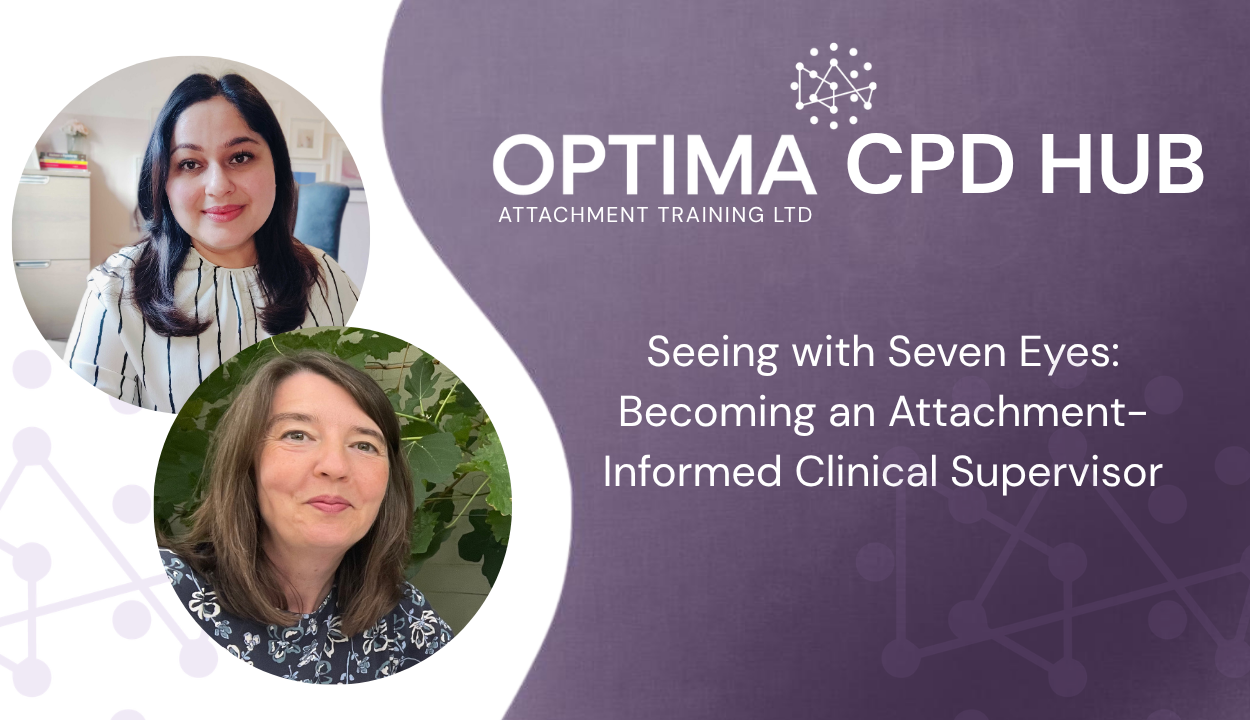
This on-demand workshop introduces the Seven-Eyed Model of Supervision, developed by Peter Hawkins and Robin Shohet. It offers a practical map for looking at supervision from several different perspectives rather than becoming fixed on one version of the work.
The workshop explores the model’s theoretical roots, including humanistic psychology, systemic thinking, psychodynamic theory, reflective practice and attachment theory. It then works through each of the seven “eyes”, focusing on the client, therapeutic interventions, the client–therapist relationship, the supervisee’s internal process, the supervisory relationship, the supervisor’s own responses and the wider systemic context.
Throughout the session, the model is presented as a way of creating supervision that can both support and challenge. It encourages supervisors and supervisees to slow down, notice what is happening in the room and consider the relationships, feelings, patterns and systems that may be shaping the work.
Key clinical themes
Seeing the client more clearly
Bringing the client vividly into supervision before moving too quickly into analysis or problem-solving.
Moving beyond advice-giving
Exploring what the therapist is doing, why they are doing it and what other options may be available, while supporting reflection rather than dependency.
Working with relationship dynamics
Paying attention to the relationship between client and therapist, including transference, unconscious interaction and repeated relational patterns.
Using internal responses as information
Exploring the supervisee’s feelings, thoughts and countertransference, as well as the supervisor’s own sensations and intuitive responses.
Noticing parallel process
Looking at how dynamics from the therapeutic relationship may be appearing within the supervisory relationship.
Holding the wider context in mind
Considering ethical frameworks, organisational culture, support systems, social pressures and other stakeholders that may affect therapy and supervision.
Applying an attachment lens
Understanding supervision as a secure base for exploration, vulnerability and reflective thinking, while noticing how care-giving and attachment patterns may be activated.
The workshop also considers the strengths and limitations of the model across counselling, healthcare, organisations, education, systemic work and short-term practice. It invites participants to think of the Seven-Eyed Model as a flexible map that can support deeper reflection, multiple perspectives and more transformative learning.
Learning outcomes
By the end of the recording, you will have explored:
* The history, origins and theoretical roots of the Seven-Eyed Model
* The purpose of each of the seven perspectives
* Practical supervisory questions and interventions
* The model’s relational, systemic and attachment-based dimensions
* Its strengths, limitations and possible applications in practice
Want to keep questioning what we think we know about our clients?
Amy’s work is an important reminder that even well-established therapeutic models can lead us to misunderstand what we’re seeing when we view a client through only one lens.
Our CPCAB Level 7 Diploma in Attachment-Focused Psychotherapeutic Practice is for experienced therapists who want to deepen their clinical thinking, question established assumptions and become more thoughtful about how and when they use attachment theory.
It’s not about making everything fit an attachment explanation. It’s about developing the confidence to hold complexity, recognise the limits of our own frameworks and remain curious about the individual in front of us.